
Hot Reviewed Manila Live Tables ─ Fair Shuffling Protocols Under the Microscope
The Philippines' licensed online gaming ecosystem has matured into one of Asia's most scrutinized jurisdictions for remote dealer operations. When industry analysts discuss Hot Reviewed Manila Live Tables ─ Fair Shuffling Protocols, they are examining a convergence of RNG-certified digital card delivery, physical shuffle verification, and multi-camera transparency that few rival markets can replicate. 🎲
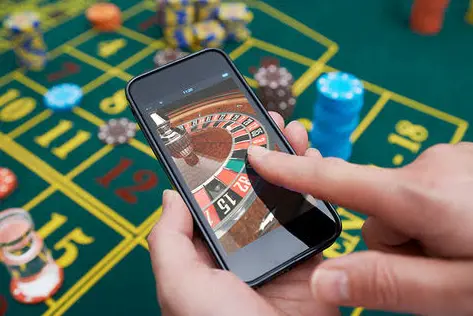
Regulatory Architecture Governing Shuffle Integrity
Every legitimate Manila-based live dealer studio operates under the oversight of PAGCOR, the state regulator that mandates pre-shuffled deck authentication through third-party testing laboratories. These labs deploy high-speed camera arrays to log the exact sequence of each deck before it enters the shoe. The Hot Reviewed Manila Live Tables ─ Fair Shuffling Protocols rely on this chain-of-custody documentation, ensuring no manual intervention occurs between verification and the first card drawn. Practitioners refer to this as a "sealed entropy pipeline," where physical randomness is mathematically validated prior to gameplay.
Mechanical Shuffling Versus Manual Wash Procedures
Premium studios in Manila employ a dual-layer approach: an initial manual wash followed by mechanical shuffler insertion. The wash disperses card clusters from the previous round, while the mechanical unit introduces algorithmic randomness that satisfies statistical uniformity tests. Surveillance teams monitor each wash cycle via overhead biometric cameras, and any deviation triggers an immediate table reset. This protocol eliminates deck-stacking vulnerabilities that plagued early live dealer iterations.

Real-Time Audit Trails and Player Verification Rights
Sophisticated players now demand access to shuffle audit trails. Manila operators respond with time-stamped logs that players can request through support channels. These logs include the shoe ID, shuffle timestamp, and certifying lab reference number. The Hot Reviewed Manila Live Tables ─ Fair Shuffling Protocols thereby create a two-way transparency model, where the house voluntarily exposes its randomization methodology to independent review. 🃏
Card Delivery Speed and Shoe Rotation Standards
Shoe rotation occurs at predetermined penetration points, typically between 50% and 75% depletion, depending on the game variant. Manila studios standardize this through dealer training programs that emphasize consistent card extraction angles and burn card procedures. Any shoe that reaches its penetration threshold without rotation is flagged by the pit boss system, and the round is voided. This precision safeguards against card-counting exploits while maintaining game flow.
Technological Redundancy in Live Streaming Environments
Redundant encoding servers ensure that shuffle verification footage remains accessible even during bandwidth fluctuations. Each table feeds into at least two independent cloud storage nodes, with hash values generated every sixty seconds. If a discrepancy emerges between the live feed and the stored hash, the table automatically suspends play pending a manual integrity check. Such redundancy is non-negotiable for operators targeting high-roller clientele across multiple time zones.
Comparative Fairness Metrics Across Manila Studios
Independent review panels periodically rank Manila live tables on shuffle fairness indices, factoring in deck verification frequency, camera coverage angles, and dealer compliance scores. Top-tier studios consistently achieve above 98% on these composite metrics. The competitive pressure to excel in Hot Reviewed Manila Live Tables ─ Fair Shuffling Protocols drives continuous investment in biometric monitoring and AI-assisted anomaly detection, pushing the entire jurisdiction toward higher integrity benchmarks. ♠️
Player Education and Responsible Verification Practices
Informed players should familiarize themselves with the specific shuffle certification displayed in each table's information panel. Reputable Manila operators publish their lab certificates directly within the game lobby, allowing users to cross-reference certification numbers with the issuing laboratory's public registry. This level of due diligence transforms passive gameplay into an informed, trust-verified experience.