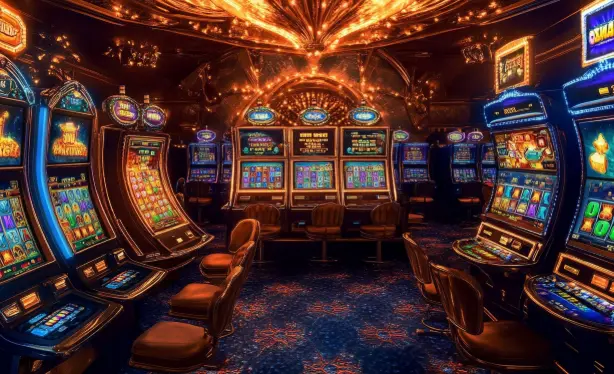
Why Armed Security Presence Defines the Modern USA Casino Floor
Armed security presence in USA casinos is not theater—it is the hardened perimeter that separates a regulated gaming floor from an open cash vault. Walk into any serious property on the Las Vegas Strip or a tribal operation in Oklahoma, and the first thing a professional notices is the posture of the armed officers at the cage and the emergency exits. That posture tells you everything about the property's risk model. A slouched guard means management is buying insurance paperwork, not protection. A squared-away officer with a level-three retention holster and a visible radio means the surveillance team and the floor team are actually talking to each other. 🎯
The Hardware Reality Behind Armed Posts
Most patrons never register the hardware loadout, but the hardware is where the real audit trail lives. A properly equipped armed officer in a USA casino carries a duty weapon with at least two spare magazines, a ballistic vest rated for rifle threats at the cage positions, and a body-worn camera that syncs to the same evidence server as the eye-in-the-sky. The critical detail is the retention system—level two or level three holsters are non-negotiable in crowded gaming environments where a weapon grab attempt during a chip dispute is a documented threat vector. I have seen properties cut corners with level-one holsters and call it adequate. That is not security; that is a liability bomb with a fuse labeled "when, not if." 💥

Surveillance Integration and the Armed Response Timeline
Here is the mechanism that separates elite properties from the pretenders: the armed response timeline from surveillance detection to physical intervention. A tier-one USA casino maintains a documented sub-ninety-second armed response to any cage-level anomaly flagged by the surveillance room. That number is not marketing fluff—it is a calculable metric derived from camera-to-radio latency, officer positioning doctrine, and floor traffic modeling. When a property claims armed presence but cannot articulate its response timeline, the operation is running on vibes, not protocol. The surveillance director and the security director must share a single incident command structure, and the armed officers must train on the same scenario library the surveillance team uses for detection drills. Anything less is a gap a professional crew will find and exploit.
Regulatory Pressure and Tribal Compact Nuances
Armed presence in USA casinos is bound tight by a patchwork of state gaming commission rules, tribal-state compacts, and local law enforcement coordination agreements. A commercial property in Mississippi operates under different armed post requirements than a Class III tribal facility in California, and the officer certification standards vary wildly. The sharp operators map every jurisdiction they touch and build armed post orders that exceed the strictest applicable standard, not the loosest. That is the only way to survive a multi-property audit without scrambling. The properties that treat armed security as a checkbox are the same ones that show up in incident reports with embarrassing frequency. 🛡️

Staffing Ratios and the Cost of Thin Coverage
Let's talk ratios, because ratios are where the math gets ugly. A credible armed presence doctrine for a mid-size USA casino floor calls for one armed officer per designated high-value zone, plus a roving armed supervisor, plus a dedicated armed post at the main cage during all cash-handling hours. Cut that ratio and you are not saving money—you are financing your next settlement. The labor math is brutal: armed officers command premium wages, require recurring qualification shoots, and carry liability exposure that demands serious insurance riders. But the alternative is a single incident that wipes out a quarter's EBITDA and invites regulatory scrutiny that never fully goes away. The properties that understand this treat armed presence as infrastructure, not overhead. 😤
Training Doctrine That Actually Holds Under Pressure
Live-fire qualification once a year is a joke, and the sharp properties know it. The real standard is quarterly scenario-based training that forces armed officers to make shoot-or-hold decisions in simulated casino environments—crowded aisles, slot machine noise, intoxicated patrons crossing the line of fire. Add in joint drills with surveillance, floor supervisors, and local law enforcement, and you start to see a security culture that holds when the pressure spikes. The officers who train this way develop the split-second judgment that separates a controlled response from a catastrophe. That judgment is the single most valuable asset on the gaming floor, and it cannot be bought off a shelf.